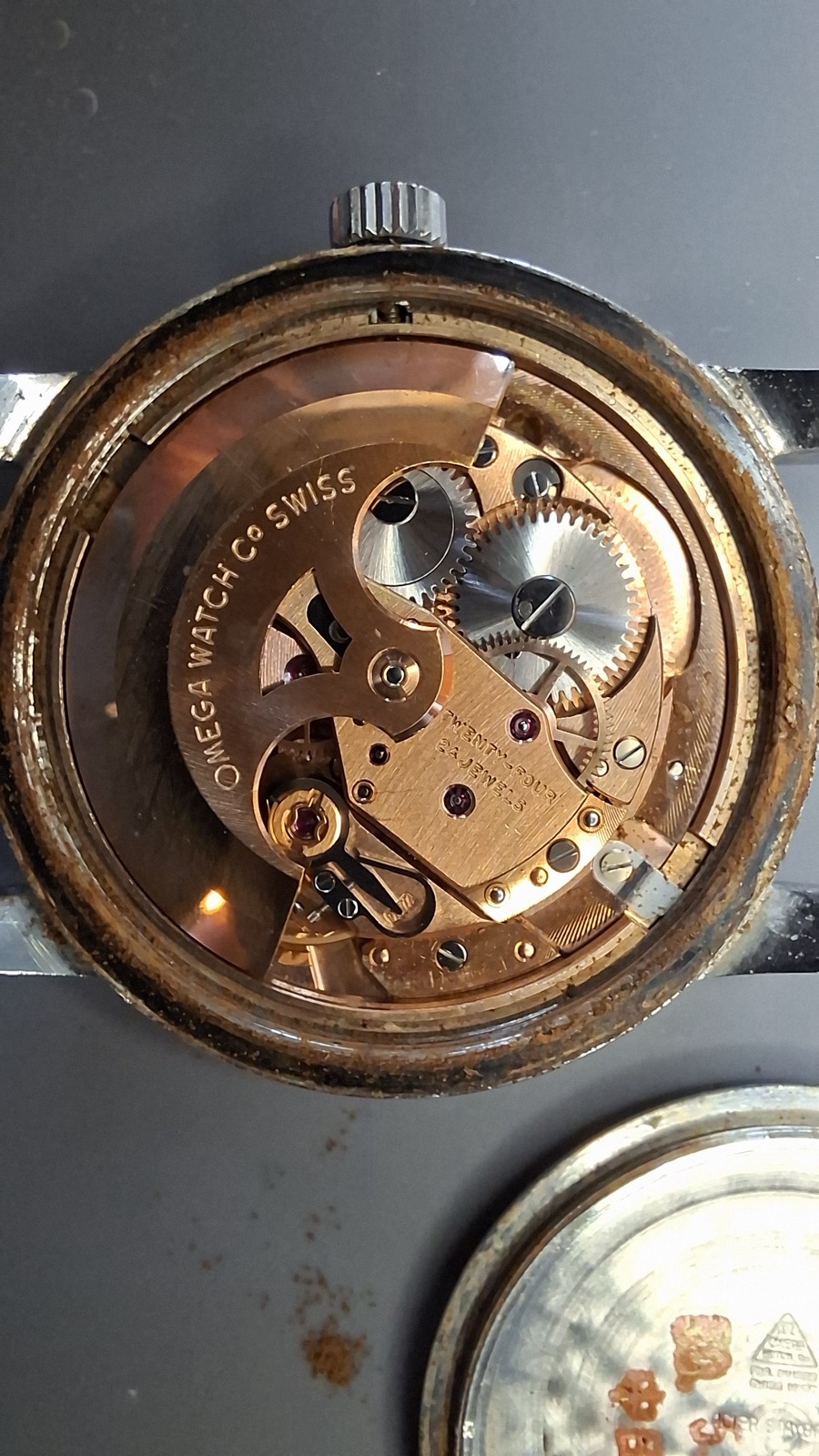
Removing a stubborn screw on case back
I came across an Omega Seamaster with a badly seized screw-on case back. Judging by the scratches on it, others had already tried to open it. Before coming up with this method, I tried supergluing a nut to the back (you can still see the glue residue in the picture below) and unscrewing it with a spanner, heating it with a heat gun, and using a triangle case back opener with the watch held in a vise. It wouldn’t budge at all, and you’ll see why.
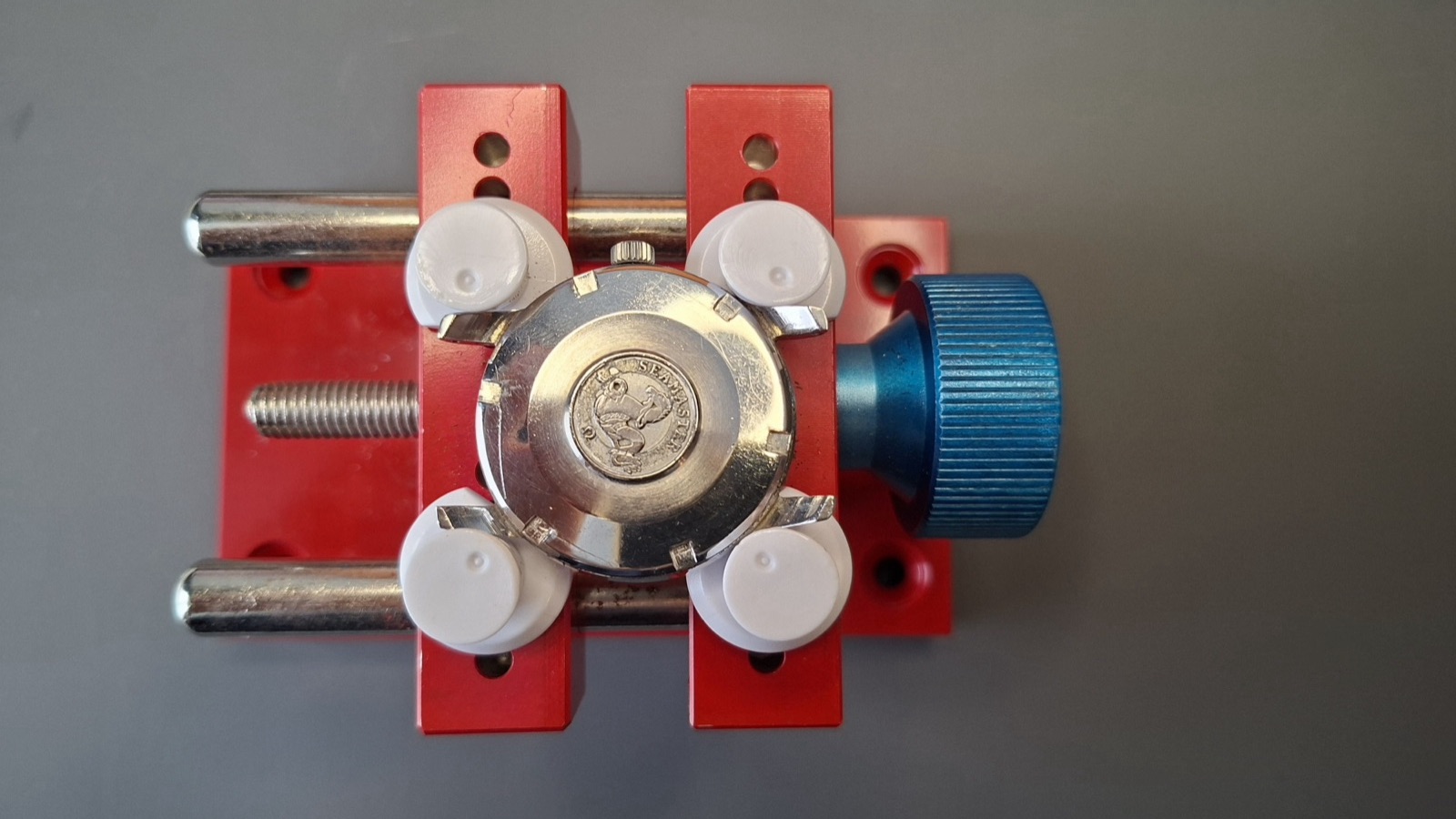
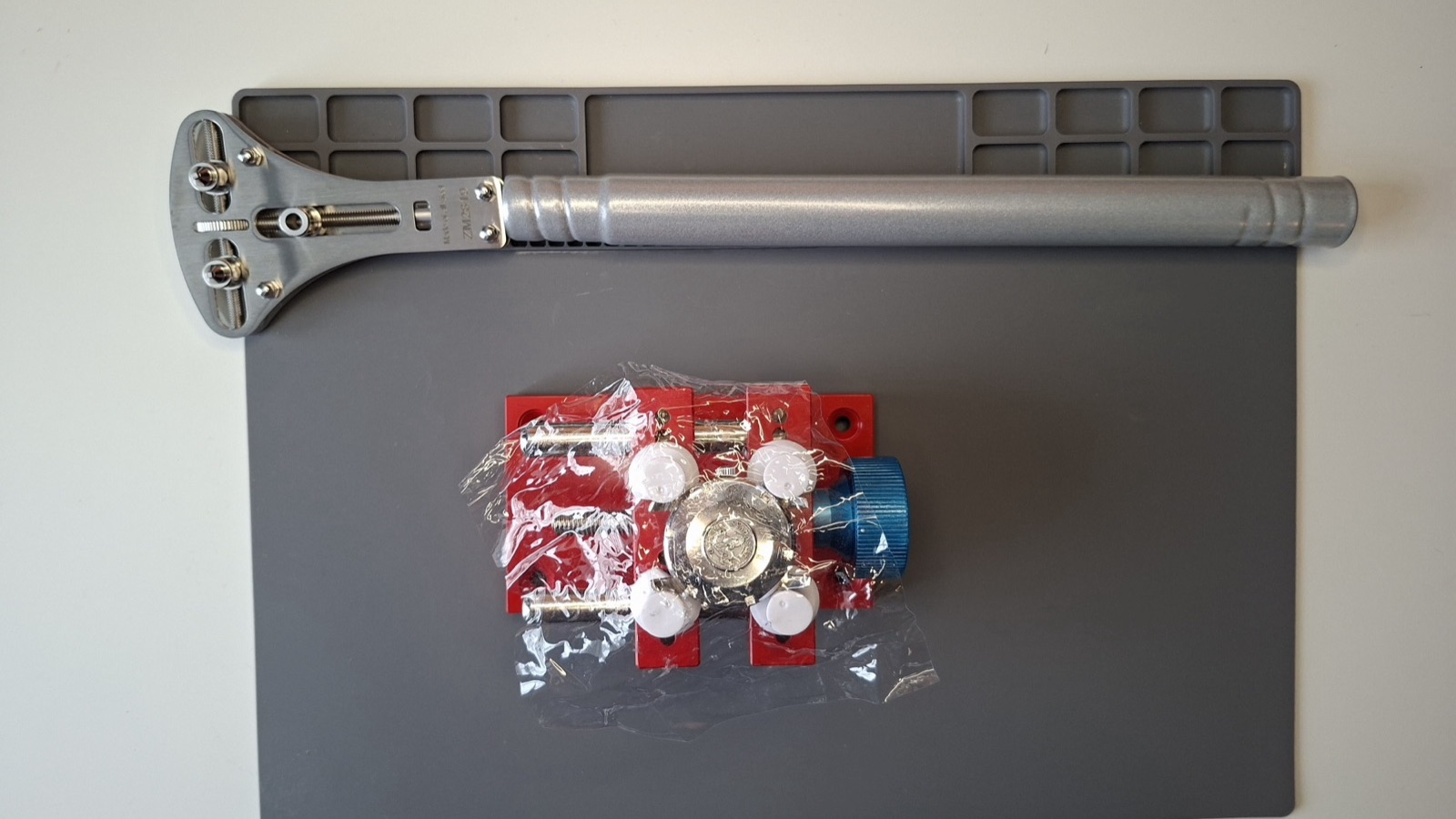
Step 1: Place the watch in a vise and clamp it well. It’s vital that it doesn’t move during this process.
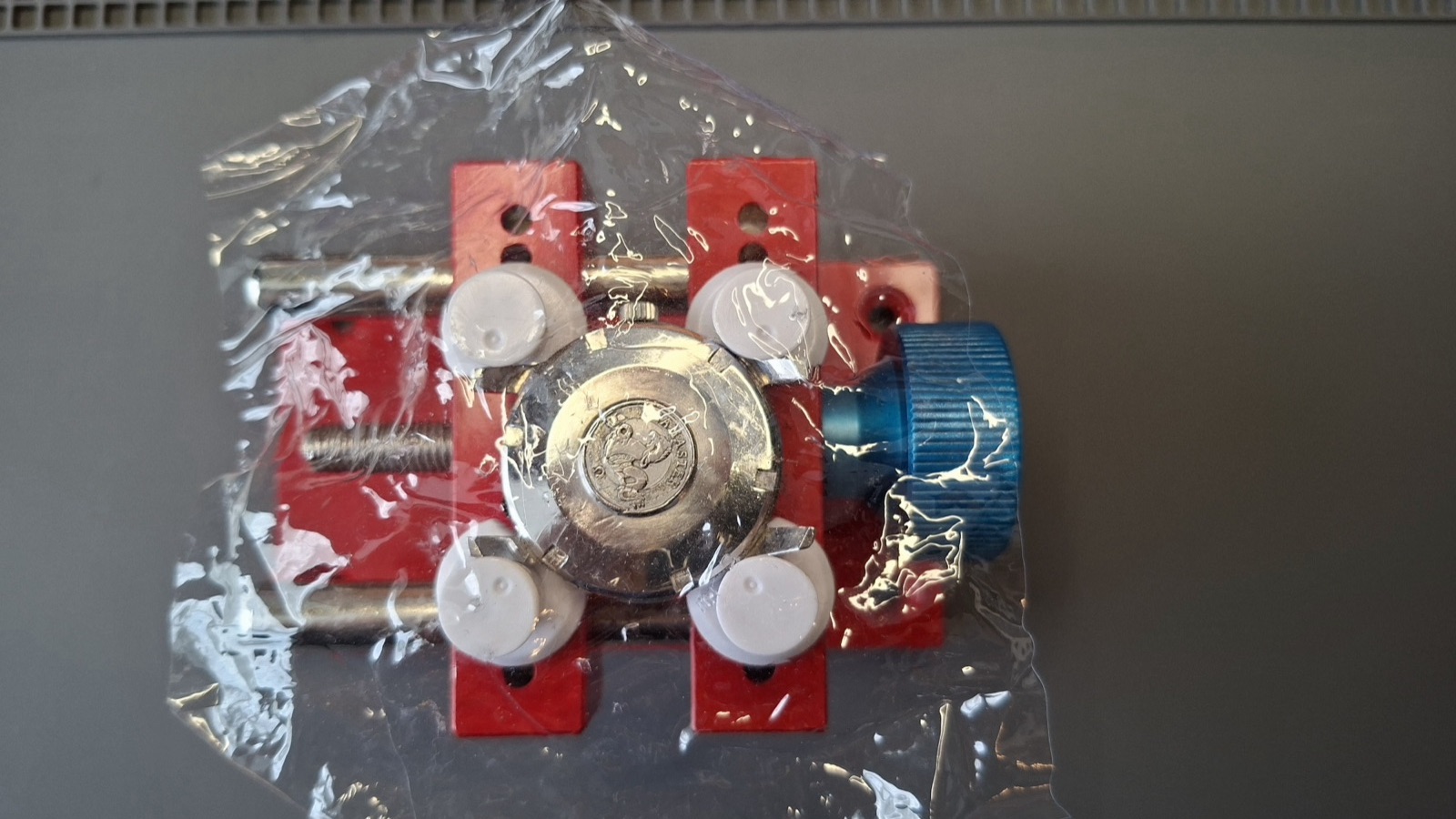
Step 2: Cover the case back with an anti-slip film. It’s nice and squishy, and if your tool slips, it won’t leave such deep scratches.
Step 3: Pick the right bits for the screw-back case opener. They need to fit snugly in the grooves of the case back. I never use all three of those claws. Two is enough for most jobs. Also, the third doesn’t line up with Seamaster watch grooves.
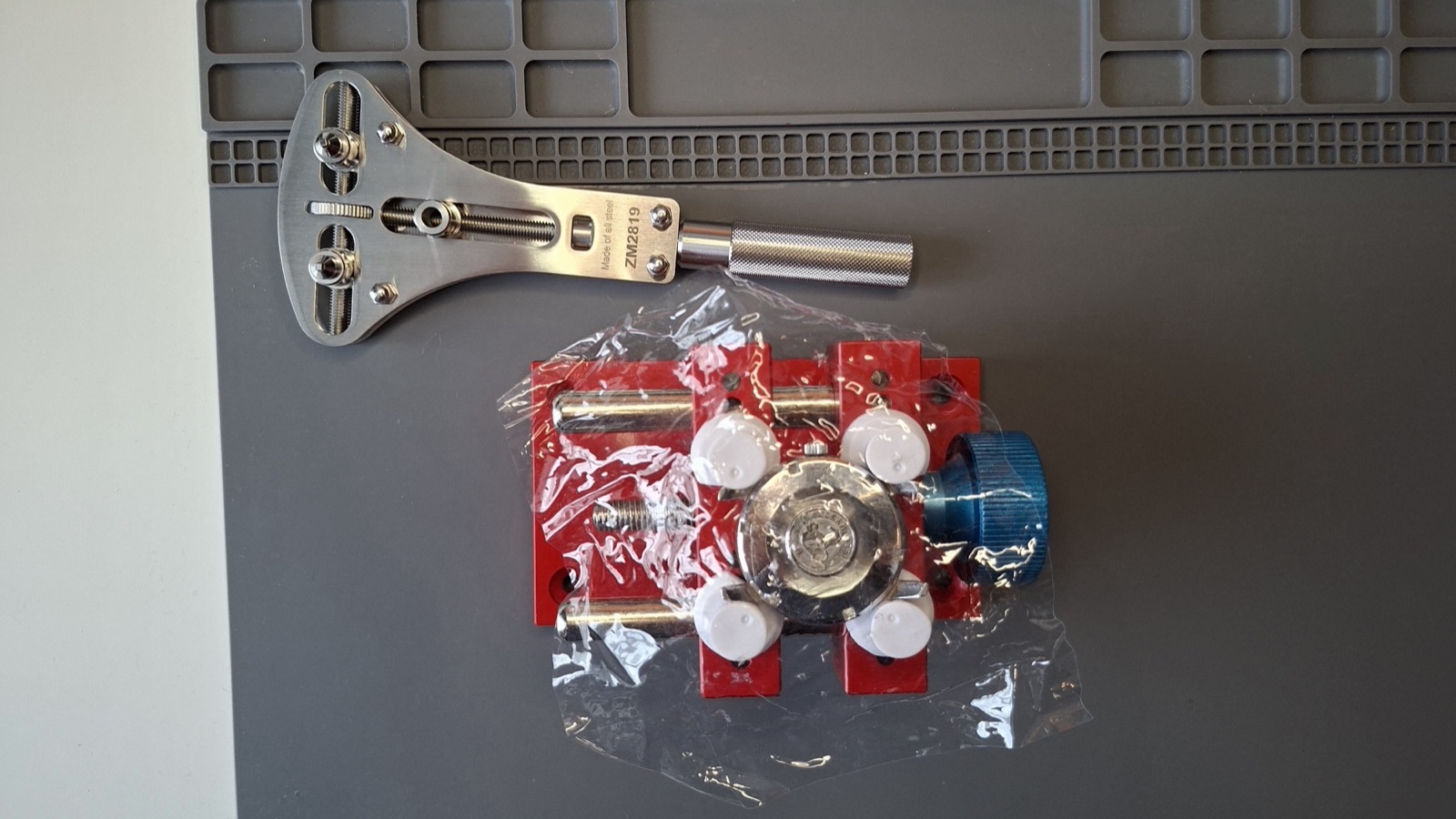
Step 4: The relatively short handle of the tool didn’t give me enough force to crack the back open, so I added what’s known in auto repair as a breaker bar. Rotate the screw back counter clockwise while keeping the case opener horizontal.
After some back and forth, the case finally opened, and I could see why it had been shut so tight. The back was welded shut by rust.
Vintage watches are often far from watertight. Back then, real water resistance wasn’t the norm, so even something as harmless as washing your hands can let moisture creep in, usually around the crown. And where there are gaskets, time isn’t kind to them: they either dry out and crumble until they no longer seal, or they melt and fuse in place. Add the fact that many vintage watches spend decades forgotten in a drawer, and it’s safe to assume the gaskets are shot and some water has found its way inside.